Choosing the Right Grass Seed for Your Florida Lawn
By Editorial Team · February 18, 2026
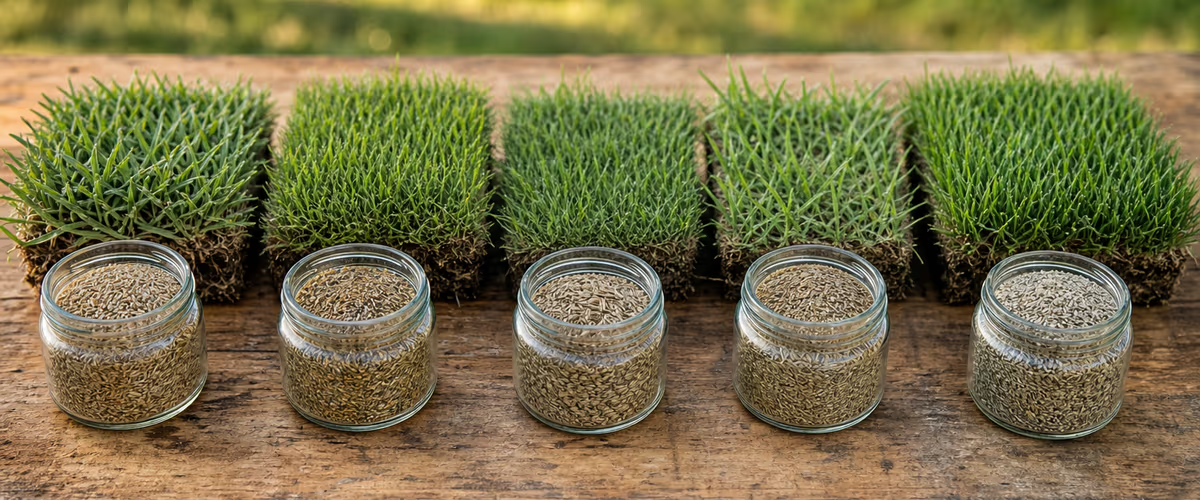
Florida has roughly six warm-season grasses commonly used for lawns, and they’re not interchangeable. The wrong choice for your sun, traffic, and irrigation setup means an unhappy lawn no matter how perfect the hydroseed application is. This guide walks through each option, the trade-offs, and which one fits which scenario.
The decision matrix at a glance
| Species | Sun | Water need | Traffic tolerance | Maintenance | Best for |
|---|---|---|---|---|---|
| Common Bermuda | Full sun | Medium-high | High | Moderate | Sunny lawns, sports fields |
| Improved Bermuda | Full sun | Medium-high | Very high | Higher (mowing freq) | Premium sunny lawns |
| Bahia | Full sun to part shade | Low-medium | Medium | Low | Rural lots, large acreage |
| Centipede | Full sun to light shade | Low | Low | Very low | Low-maintenance suburban |
| Zoysia | Full sun to part shade | Medium | High | Moderate | Premium dense lawns |
| St. Augustine | Part shade to shade | Medium-high | Low-medium | Moderate (pest pressure) | Shaded lots (sod only — rarely seed) |
Quick rule: if you have full sun and want a durable, traditional-looking lawn, Bermuda is the default. If you’re shade-heavy, St. Augustine sod is the realistic answer (St. Augustine is rarely available as seed). For everything in between, the choice depends on what you’re optimizing for.
Bermuda — the workhorse
Bermuda is Florida’s most common warm-season hydroseed choice, and the Bob Vila hydroseeding guide notes it as “one of the most popular species” for hydroseeding generally. There’s a reason — it’s drought-tolerant, fast-establishing, dense, and forgiving.
Common Bermuda is the affordable workhorse: solid germination, decent appearance, good wear tolerance. The species many municipal and DOT projects standardize on.
Improved Bermuda cultivars (Riviera, Princess 77, Yukon, La Paloma) trade a higher seed cost for:
- Finer leaf texture
- Better color
- Denser growth habit
- Improved cold tolerance for North Florida
When to choose Bermuda:
- Full-sun residential lawn
- Athletic field or high-traffic area
- Coastal property with salt exposure (Bermuda tolerates salt better than most)
- Large lot where you want a uniform look at a reasonable price
When to avoid:
- Heavily shaded lots (Bermuda needs 6+ hours of direct sun)
- Properties without functioning irrigation (Bermuda needs more water than Bahia or Centipede)
Bahia — the low-maintenance default
Bahia is what you see along most Florida highway shoulders and on most large rural lots. It’s not the showcase species — but it’s tough, deep-rooted, and forgiving of poor soil and irregular irrigation.
Argentine Bahia is the most common variety, with darker color and coarser texture than Pensacola Bahia. Argentine is the typical residential choice.
Pensacola Bahia has finer leaves, lighter color, and is more cold-tolerant — common in North Florida and Panhandle.
When to choose Bahia:
- Large lots (over half an acre) where seasonal full coverage is hard with finer grasses
- Sandy soils with poor moisture retention
- Properties without reliable irrigation
- Rural acreage, pasture-adjacent lawns, septic field areas
- Low-input maintenance preference
When to avoid:
- High-end suburban properties where you want a manicured look (Bahia’s seed heads are tall and weedy-looking)
- Heavily-shaded lots
- Sports fields and high-traffic athletic use
Centipede — set it and forget it
Centipede is the low-input choice. Slow-growing, light-feeding, doesn’t need much water once established, and tolerates Florida’s acidic sandy soils well.
When to choose Centipede:
- Homeowner who hates mowing and fertilizing
- Sandy, slightly acidic soils common in much of Florida
- Light-to-moderate traffic
- Budget-conscious lawn that’s “good enough” rather than premium
When to avoid:
- Properties with dogs, kids, or heavy entertaining (low traffic tolerance)
- Need for fast establishment (slow to fill in from seed)
- Heavy shade (needs at least some sun)
Centipede has a deserved reputation for “looking yellowish” — that’s its normal color in lower nitrogen conditions. Trying to fertilize it heavily to make it darker often kills it (“centipede decline”). Accept the light-green look or pick a different species.
Zoysia — premium look, patience required
Zoysia delivers the densest, most carpet-like warm-season lawn Florida can grow. The catch is that it’s slow to establish from seed and expensive — most Florida Zoysia is sod-installed.
From seed: possible but takes 60–90 days to fill in vs 30–45 for Bermuda. Higher seed cost.
Common varieties: Zenith and Empire Zoysia (Zoysia japonica) are seedable.
When to choose Zoysia from hydroseed:
- Patient homeowner willing to wait extra weeks for full establishment
- Premium suburban lawn where appearance matters
- Light-to-moderate shade tolerance (Zoysia does better in part shade than Bermuda)
- Budget for higher seed cost
When to avoid:
- Need fast establishment (use Bermuda instead)
- Severely shaded lots
- Athletic field use during the establishment year
St. Augustine — usually sodded, not seeded
The HydroseedCalculator Florida guide doesn’t include St. Augustine in its list of seedable species. There’s a reason: St. Augustine seed is rare, expensive, and unreliable. Almost all Florida St. Augustine lawns are established from sod or plugs.
Why mention it? Because it’s the dominant lawn species in shaded suburban Florida. If your lot is heavily shaded, hydroseeding (with any warm-season grass) probably won’t give you the lawn you want. Sodded St. Augustine is the realistic answer.
The exceptions: Floratam St. Augustine is occasionally available as plugs, and some specialty seed houses offer expensive St. Augustine seed for renovation work. These are exceptions, not the default.
If your lot has 4+ hours of direct sun, consider Zoysia hydroseed as an alternative. Below 4 hours, plan on St. Augustine sod.
Common blends and when they’re a good idea
Contractors often mix two or three species to balance trade-offs:
- Bermuda + Bahia (80/20): Bermuda provides density and appearance; Bahia fills in difficult sandy or low-irrigation zones. Common compromise for mixed-condition lots.
- Bermuda + annual ryegrass (winter overseed): Bermuda for summer, ryegrass for winter color. Standard play for sports fields.
- Centipede + Bermuda (50/50): A “set it and forget it” lawn with slightly better traffic tolerance. Less common but workable.
- Native blends (wiregrass + indiangrass + bluestem + partridge pea): For ecological restoration and reclamation projects, not residential lawns.
When asking for a blend, name the species and rough ratio you want. “Just a warm-season blend” gives the contractor too much discretion.
How to actually decide
Three questions in order:
- How much sun does your lawn get? Less than 4 hours = St. Augustine sod (not hydroseed). 4–6 hours = Zoysia. 6+ hours = Bermuda, Bahia, or Centipede.
- What’s your maintenance tolerance? Low = Centipede or Bahia. Medium = Bermuda. High (sports/premium) = improved Bermuda or Zoysia.
- What’s your irrigation reality? Reliable = anything. Spotty = Bahia or Centipede (both more drought-tolerant).
Cross-reference your three answers, and one species usually emerges clearly.
Cool-season overseed for winter color
For Bermuda lawns and athletic fields that need to stay green through winter, annual ryegrass overseed in October keeps the lawn green until April. The Bob Vila guide notes that ryegrass “germinates faster” than warm-season grasses, making it ideal for the quick winter-coverage role. Then it dies back naturally as Bermuda regreens in spring.
This isn’t a separate primary species — it’s an overlay on warm-season turf for visual continuity.
Get a contractor’s recommendation
Most reputable Florida hydroseed contractors will visit your property, evaluate sun and soil, and recommend a blend matched to your specifics. Request a free estimate and we’ll match you with a local pro who can walk the site and suggest the right species mix for your conditions.