BFM vs Standard Hydroseed: How to Spec the Right Slurry for Your Slope
By Editorial Team · February 25, 2026
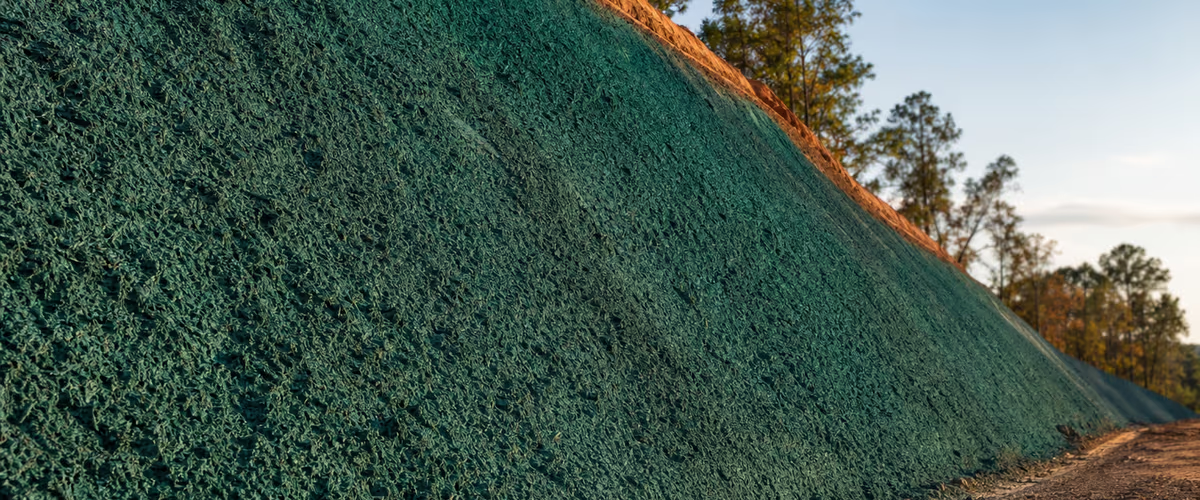
The single biggest mistake on slope hydroseeding projects is specifying the wrong slurry for the angle. Standard hydroseed on a 2:1 cut slope will fail at the first heavy rain. BFM on a flat lawn is wasted money. This guide walks through how to match the slurry to the slope, what each product actually does, and the cost/performance trade-offs.
How slope is described
Slope is described as a ratio of horizontal run to vertical rise. “3:1” means three feet of horizontal distance for every one foot of vertical drop. The smaller the first number, the steeper the slope.
| Slope ratio | Percentage grade | Description | Visual cue |
|---|---|---|---|
| 10:1 | 10% | Gentle | Barely noticeable underfoot |
| 5:1 | 20% | Mild | Walkable, easy mowing |
| 3:1 | 33% | Moderate | Borderline mowable with care |
| 2:1 | 50% | Steep | Not safe to mow with a walk-behind |
| 1:1 | 100% | Very steep | Approaches a true cut bank |
| Steeper than 1:1 | >100% | Wall-like | Engineered slope stabilization territory |
If the project documents only give you “slope %” — divide 100 by the percentage to get the rough ratio. 50% slope = 100/50 = 2:1.
The three main product categories
Standard hydroseed
The default slurry: seed + wood or paper mulch + tackifier + starter fertilizer. Mulch application rate typically 1,500–2,500 lb/acre. The mulch’s job is to hold moisture and bind seed to soil during the first 1–2 weeks of germination. It’s not designed for major erosion resistance.
Slope range: Flatter than 3:1. Beyond that, the mulch matrix isn’t substantial enough to resist rain washout.
Cost: Lowest of the three categories.
Failure mode if used on too-steep slope: Slurry runs downhill in the first significant rain. Bare patches at the top, gullies in the middle, accumulation at the bottom.
SMM (Stabilized Mulch Matrix / Stabilized Fiber Matrix)
A step up from standard: wood fiber mulch + a less aggressive bonding agent (sometimes called a “guar gum tackifier” or “synthetic SMM”). Application rates typically 3,000–3,500 lb/acre — substantially more material than standard hydroseed.
Slope range: 3:1 to 2:1. Handles moderate slopes with moderate rain exposure.
Cost: Middle of the three categories — typically 1.5–2× standard hydroseed per acre.
Failure mode if used on too-steep slope: Holds up to most rain but fails under sustained heavy rainfall or hurricane-force events. Slow, partial washout rather than catastrophic.
BFM (Bonded Fiber Matrix)
The engineered slurry: wood fiber + crosslinking polymer + tackifier in a denser, more sophisticated mix. Cures over 12–24 hours into a continuous, rain-resistant mat that physically protects the soil while seed germinates underneath.
Slope range: 2:1 to 1:1. Required by spec on most steep DOT and pond-bank work.
Cost: Highest of the three. Typically 2–3× standard hydroseed per acre because of the polymer additives and higher application rate (3,500–4,500+ lb/acre).
Cure time: Plan 12–24 hours of dry weather after application for proper cure. Heavy rain in the first 8 hours can disrupt the matrix formation.
Decision matrix
Use this as your starting point:
| Slope | Light rain expected | Heavy rain expected | DOT or NPDES spec |
|---|---|---|---|
| Flatter than 3:1 | Standard | Standard | Standard |
| 3:1 | Standard | SMM | SMM |
| 2:1 | SMM | BFM | BFM |
| 1:1 | BFM | BFM + ECB | BFM + ECB |
| Steeper than 1:1 | BFM + ECB or TRM | BFM + TRM | BFM + TRM |
“ECB” = Erosion Control Blanket (typically biodegradable mat over the hydroseed). “TRM” = Turf Reinforcement Mat (permanent, three-dimensional mesh for very steep slopes).
If the project has any DOT or formal NPDES specification, check the spec before deciding — many specifications require a step-up product even on slopes where standard hydroseed would technically work.
What “bonded” actually means
The “bonded” in Bonded Fiber Matrix refers to the crosslinking polymer that knits the wood fibers together as the slurry cures. Before cure, the slurry is sprayable — it flows through the hydroseeder hose like any other application. As it dries, the polymer crosslinks form, linking adjacent fibers into a continuous flexible mat.
The physical result: a rough green carpet that adheres to the soil surface and resists detachment under flowing water. Rain hits the matrix and either soaks through (good — it reaches the seed) or runs off the surface (good — it doesn’t carry mulch with it). Compare this to standard hydroseed, where rain dislodges fibers in proportion to its volume.
Curing time and weather windows
The biggest scheduling constraint on BFM work is the 12–24 hour cure window. The matrix needs:
- Dry weather for at least 8 hours after application, ideally 24
- Moderate temperatures — extreme cold (<50°F) or extreme heat (>95°F) can affect cure rate
- No mechanical traffic until the matrix is fully cured
In Florida summer, this often means scheduling around the afternoon thunderstorm cycle. A 7:00 AM start with completion by noon gives the matrix the warmest, driest part of the day to cure before any chance of late-afternoon rain.
For projects with multi-day weather risk (hurricane in the forecast), most contractors will recommend delaying rather than spraying ahead of the storm.
When to add an erosion control blanket
For slopes steeper than 1:1, hydroseed alone — even BFM — usually isn’t enough. The standard play is layering:
- Apply BFM hydroseed to the prepared soil surface
- Lay an erosion control blanket (ECB) over the BFM while it’s still wet
- Pin the blanket with biodegradable stakes or staples
- Let the seed germinate through the blanket — the blanket holds everything in place during establishment
For very steep slopes (1:1 to vertical), a Turf Reinforcement Mat (TRM) replaces or supplements the ECB. TRM is a permanent three-dimensional plastic mesh that the grass roots into, providing long-term mechanical reinforcement.
Cost-vs-performance reality check
The temptation on a tight-budget project is to specify a cheaper product than the slope really needs. The math usually doesn’t work:
- Standard hydroseed on a 2:1 slope has roughly a 50–70% failure rate in a typical Florida rainy season.
- Cost of failure: full re-application (material + labor), plus any erosion damage to downstream systems, plus inspection re-fees if applicable.
If your spec calls for SMM or BFM, install SMM or BFM. The savings from cheating down are usually erased by the cost of re-doing the work.
Maintenance after application
Sloped hydroseed projects need slightly different aftercare than flat lawns:
- Watering — use lower flow rates and longer duration to avoid surface runoff. Drip-style irrigation works well on slopes if available.
- Inspection — check for early erosion signs (small gullies, mulch accumulation at the base) and address before they grow.
- Touch-up applications — bare spots discovered at the 30-day mark on slopes should be re-sprayed promptly. The longer you wait, the more soil is moving in the meantime.
Get a quote with slope-appropriate slurry
When you request a free estimate, share your slope information and project specifications — slope-aware quoting saves both you and the contractor surprises during construction.