Hydroseeding in Jacksonville, FL
Hydroseeding, erosion control, and lawn establishment services for Jacksonville, FL property owners. Jacksonville's mix of sandy coastal soils and clay pockets near the St. Johns River creates wildly different lawn condit
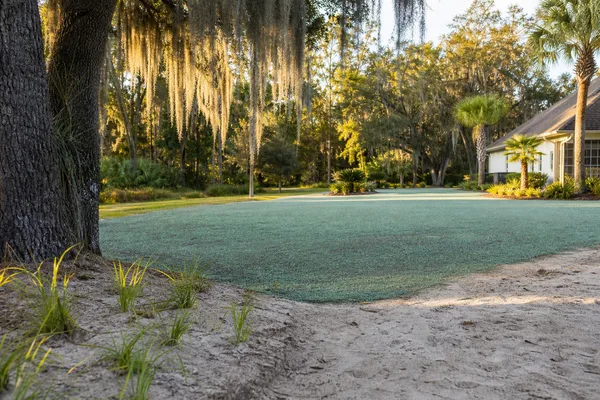
About hydroseeding in Jacksonville
Jacksonville's mix of sandy coastal soils and clay pockets near the St. Johns River creates wildly different lawn conditions across neighborhoods. Hydroseeding works particularly well here because the slurry's moisture retention compensates for the fast-draining sandy soils common in Mandarin and the Southside, while custom seed blends address the salt-tolerance needs of properties closer to the Intracoastal.
Local soil and climate
Jacksonville sits at the intersection of two distinct soil regimes. West of the St. Johns River and across much of Mandarin and the Southside, the soils are predominantly sandy with fast drainage and low natural fertility — the kind of profile where dry seeding often fails because moisture leaves the seed zone within hours. Hydroseed solves this directly: the mulch fiber holds water at the seed level for the first two weeks of germination, exactly when these sandy soils would otherwise dry out.
East of the river toward the Intracoastal, soils transition to lower-lying, sometimes-clay-influenced profiles, and salt exposure becomes a factor on properties within a mile of the water. Salt-tolerant seed blends — typically Bermuda cultivars or seashore paspalum mixes — are the standard choice for those properties.
Climate is humid subtropical with hot, wet summers (afternoon thunderstorms most days from June through September) and mild winters. Frost is rare but not unheard of in northern parts of Duval County and into Nassau, which is one reason cool-tolerant Bahia varieties are popular in the suburbs north of I-295.
Popular Jacksonville neighborhoods for hydroseed work
Hydroseed demand is concentrated in three areas:
- New construction along the Intracoastal corridor and First Coast Highway — Jacksonville’s continued residential growth puts steady volume into the hydroseed market for new homes in Atlantic Beach, Ponte Vedra, Nocatee, and the South Jacksonville growth corridor.
- Mandarin and the Southside — large lots and established neighborhoods that periodically renovate. The combination of mature trees, sandy soils, and large open areas makes hydroseed economically much more attractive than full sod replacement.
- Northside and Westside subdivisions — Oakleaf, Argyle, and the Yulee corridor in Nassau County represent the strongest growth area, with builders increasingly specifying hydroseed for finished-lot turn-over.
Common seed blends in the Jacksonville area
The default blend for most residential work in Jacksonville is a Bermuda-Bahia mix, with the ratio shifted toward Bermuda for full-sun properties (Bermuda has better appearance) and toward Bahia for properties with mixed conditions or partial shade. Argentine Bahia is the dominant Bahia variety in the area because it tolerates the variable Northeast Florida winters better than Pensacola Bahia.
Centipede is occasionally specified for low-maintenance suburban properties west of I-295. Zoysia from seed is uncommon — most Jacksonville Zoysia work is sod-installed because of the species’ slow establishment.
For properties with shade exceeding 4 hours per day, the practical answer remains St. Augustine sod rather than hydroseed (St. Augustine seed is rare and expensive). Hydroseed contractors will typically recommend either a different species selection or partial sod for shaded zones.
Local water management and HOA considerations
Jacksonville falls within the St. Johns River Water Management District (SJRWMD). Watering restrictions for residential properties typically allow:
- Two days per week based on house number address (even/odd)
- Watering before 10:00 AM or after 4:00 PM to reduce evaporation
- Newly established lawns get a temporary exemption for 30–60 days post-installation — register with the district if needed
Many master-planned communities in Northeast Florida have their own HOA-level requirements on top of the SJRWMD restrictions, sometimes including approved species lists. Check with your HOA before committing to a Centipede or Bahia blend; some HOAs require Bermuda or St. Augustine for visual consistency.
Construction sequencing in Northeast Florida
For larger Jacksonville projects (new subdivisions, commercial sites), the practical hydroseed sequencing window is April through October, with September–October being the strongest period — soil still warm enough for fast germination, peak hurricane risk easing, fewer afternoon thunderstorm disruptions. New-construction builders frequently bundle hydroseed application with the broader landscape close-out, scheduling 3–4 weeks before certificate-of-occupancy inspection.
For a Jacksonville hydroseed quote with local seed-blend recommendations and SJRWMD-aware watering planning, request a free estimate.
Nearby areas served
- Mandarin
- San Marco
- Riverside
- Avondale
- Southside
- Arlington
- Orange Park
- Fleming Island