Hydroseeding in Lakeland, FL
Hydroseeding, erosion control, and lawn establishment services for Lakeland, FL property owners. Lakeland and the broader Polk County area sit on the Central Florida Ridge — well-drained sandy soils with citrus-grove
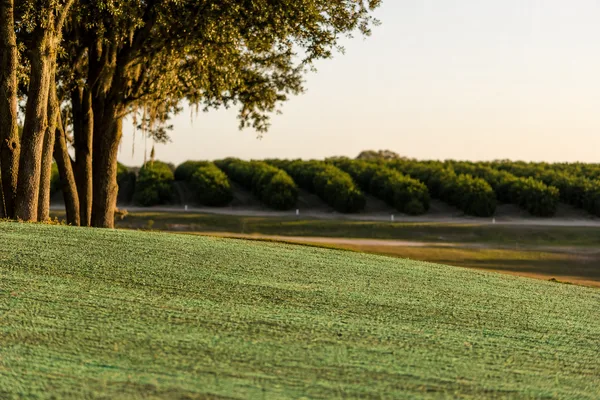
About hydroseeding in Lakeland
Lakeland and the broader Polk County area sit on the Central Florida Ridge — well-drained sandy soils with citrus-grove heritage that often need fertility correction before seeding. Phosphate-industry land reclamation creates ongoing demand for large-scale revegetation work alongside residential and commercial seeding.
Local soil and climate
Lakeland sits on the Central Florida Ridge — the elevated spine of sandy uplands running through Polk County. Soils across the ridge are predominantly deep, well-drained sands derived from ancient marine deposits, with low natural organic matter and limited fertility. The region’s century-long citrus heritage means many lots were once active groves — properties that have spent decades under citrus management often need fertility correction (particularly nitrogen) and pH adjustment before hydroseed establishment.
Climate is humid subtropical, similar to Tampa and Orlando — hot summers with afternoon thunderstorms June through September, mild winters with occasional brief frost events. The ridge elevation (some neighborhoods sit at 200+ feet, unusual for Florida) gives Lakeland slightly cooler nighttime temperatures than surrounding lowlands, which extends the practical hydroseed application window slightly compared to lower areas.
Common project profiles
The Lakeland hydroseed market has several distinct demand sources:
- Subdivision new construction. Continued residential growth in north and east Lakeland, with master-planned communities like Hartford and Highland Pointe absorbing new homes. Production builders increasingly specify hydroseed for finished-lot landscape.
- Established neighborhood renovations. South Lakeland, the Cleveland Heights area, and Lake Hollingsworth properties periodically renovate. Larger lots and mature landscaping make hydroseed economically attractive.
- Industrial corridor commercial work. Lakeland Linder Airport area, the I-4 corridor distribution warehouses, and Polk County industrial development create steady commercial hydroseed demand.
- Citrus-conversion residential. Former citrus groves being converted to residential subdivisions — large bulk-grading operations followed by hydroseed application as the landscape close-out step.
Reclamation work in Polk County
Polk County is the historical center of Florida’s phosphate-mining industry, and the county continues to produce significant phosphate today. Phosphate-related hydroseed and revegetation work is one of the area’s unique commercial demand sources:
- Reclaimed land revegetation. Mining operators are required by FDEP-approved reclamation plans to restore vegetative cover to mined-out lands. Native and naturalized blends covering hundreds of acres at a time.
- Settling pond and clay-cell stabilization. Mining infrastructure with specific erosion-control requirements; specialty hydromulch products often required.
- Buffer zone and conservation area work. Setback zones around mining operations require permanent stabilization and habitat-appropriate species selection.
- Post-mining residential and commercial development. As reclaimed lands are developed, hydroseed work follows the construction sequence.
Companies experienced in phosphate reclamation work tend to have established relationships with the major operators and FDEP. For reclamation projects, ask the contractor about their specific phosphate-area experience.
Common seed blends for Lakeland
Bermuda dominates Polk County residential hydroseed work:
- Common Bermuda for production-builder subdivisions and HOA common areas — affordable, fast-establishing, good appearance at reasonable cost
- Improved Bermuda cultivars for premium residential properties
- Bahia for larger lots and rural acreage in unincorporated Polk County — Argentine and Pensacola varieties
- Centipede occasionally for low-maintenance properties
For phosphate-reclamation projects, blends shift to include more native species: wiregrass, lopsided indiangrass, broomsedge, and partridge pea — matched to the specific reclamation plan and FDEP requirements.
Soil amendment considerations
Properties on former citrus groves often need amendment before hydroseed:
- Soil pH may run alkaline in old citrus areas due to decades of lime application. Sulfur amendment occasionally needed.
- Nitrogen depletion is common — old grove soils often lack the nitrogen needed for fast grass establishment.
- Citrus residue and stump grinding from grove clearing creates surface debris that needs cleanup before application.
A reputable Polk County contractor will soil-test before specifying the slurry composition.
Water management and Polk County considerations
Lakeland falls within the Southwest Florida Water Management District (SWFWMD). Watering schedules in Polk County typically allow:
- Two days per week for established lawns (Polk County is less restrictive than coastal Pinellas)
- Hours-of-day restrictions to reduce evaporation
- Newly established lawn exemptions during the establishment window
The two-days-per-week schedule (versus Pinellas County’s one-day) gives Lakeland-area residential hydroseed more flexibility than the Tampa Bay area.
Request a Lakeland-area quote
For a Lakeland-area hydroseed quote with citrus-grove-soil-aware amendment planning, phosphate-reclamation experience, and SWFWMD-compliant scheduling, request a free estimate.
Nearby areas served
- Winter Haven
- Auburndale
- Bartow
- Plant City
- Polk City