Athletic Field & Sports Turf Seeding
Hydroseeding for football, soccer, baseball, and multi-use athletic fields — fast establishment with dense, wear-resistant turf.
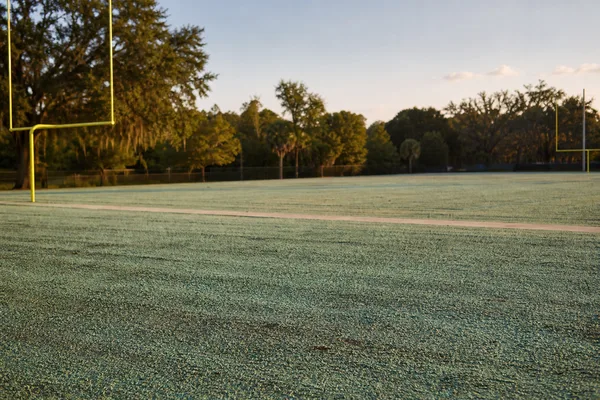
Sport-specific seed blends (Bermuda, ryegrass overseed, Bahia)
Crown-tolerant mixes for irrigated infields
Coordination with field-marking and irrigation contractors
Off-season scheduling for minimum facility downtime
Athletic fields are unforgiving customers. They need to look good (parents, broadcasters, photographers), survive heavy traffic during the season, and re-establish quickly after games. Hydroseeding handles all of this efficiently for Florida schools, parks, and athletic complexes — provided the seed blend is matched to the sport and the application is timed around the season.
What sports field hydroseeding covers
- High school and college fields — football, soccer, lacrosse, multi-use rectangular fields. Typically dense Bermuda or hybrid Bermuda blends.
- Baseball and softball outfields — same Bermuda-dominant blends; infield dirt areas managed separately.
- Parks and rec multi-use fields — broader blends prioritizing wear tolerance over visual perfection.
- Practice fields and band fields — heavily-trafficked secondary fields that need fast recovery.
- Equestrian and event arenas with grass surface — specialty Bermuda blends matched to expected hoof traffic.
Seed blend selection
The dominant choice for Florida sports turf is warm-season Bermuda — fast-establishing, dense, and wear-tolerant. Within that category:
- Common Bermuda — the workhorse. Affordable, easy to source, fast germination. Good for rec fields and lower-budget high school programs.
- Improved Bermuda varieties (Riviera, Princess 77, Yukon, La Paloma) — denser growth habit, better color, finer leaf texture. Premium blends for college-level fields and high-profile high schools.
- Bahia blends — used on lower-traffic fields and grade-school playing surfaces. Lower maintenance, less green-up.
- Cool-season overseed (Annual ryegrass) — sprayed on top of dormant Bermuda for winter color and game-ready surface from October through March.
For most Florida high school football programs, the standard play is permanent Bermuda established from hydroseed in spring/summer, with annual ryegrass overseed in late October to keep the field green and playable through the winter season.
Overseeding cycles for Florida sports fields
Florida’s warm-season Bermuda goes dormant (yellow-brown) when soil temperatures drop below ~60°F. For fields that need green appearance and active play through winter, hydromulched ryegrass overseed is the standard approach:
- Mid-to-late October: Apply ryegrass overseed via hydromulch onto closely-mowed Bermuda. Light fertilizer, supplemental irrigation.
- Throughout winter: Ryegrass provides green cover and play surface. Mow regularly, fertilize lightly, water as needed.
- March–April: Reduce mowing height to stress the ryegrass, allowing the underlying Bermuda to wake up and take over as soil temperatures rise.
- Late April or May: Ryegrass dies back, Bermuda regreens. Optional spring fertilization helps the transition.
For fields not in active winter use (summer-season-only sports like youth soccer), overseeding can be skipped, with the field allowed to go dormant in winter and regreen naturally in spring.
Scheduling around game season
The biggest constraint on athletic field hydroseed is the season calendar. Establishment takes 4–6 weeks before the field can handle traffic, plus another 2–4 weeks for dense fill-in. Common scheduling approaches:
- Spring renovation (March–May): New Bermuda establishment for fall football. Allows June–August for full fill-in before season starts. Standard approach for full-field renovation.
- Summer touch-up (June–July): Repair high-wear zones (between hashes, goalmouths) before the fall season. Smaller projects, less downtime.
- Post-season repair (December–February): Heavy renovation work for fields not in active winter use. Slower establishment because of cooler soil, but minimal scheduling impact.
- In-season patching: Generally not recommended — establishment time conflicts with active play. Field managers usually wait for the next gap window.
For multi-sport facilities sharing one field, coordinate with all coaches before scheduling the renovation window. Losing a field for 6 weeks is fine if everyone knows in advance; it’s a problem if it surprises a coach mid-season.
Coordination with other contractors
Sports field projects typically involve more than just the hydroseed contractor:
- Field-marking contractor. Lines, hash marks, numbers, and logos are painted onto the established turf separately. Coordinate so that hydroseed application is complete and the field is ready for marking before opening day.
- Irrigation contractor. Sports fields almost always have automated irrigation. Verify that the system is tested, the controller is set to support the establishment watering schedule, and any zones near the seeded area are adjusted to avoid overwatering or dry spots.
- Field marking removal / new line layout. If field configuration changes (e.g., switching from football to soccer), confirm timing with the marking contractor before the renovation.
- Equipment storage and access. Tractors, mowers, and field maintenance equipment shouldn’t be on the field during the first 4–6 weeks. Plan storage and access routes accordingly.
Quote your field renovation
Send field dimensions (yards or square feet), current condition, sport(s) played, irrigation status, and your tentative renovation window. Request a free estimate and we’ll match you with a contractor with sports turf experience in Florida.