When Is the Best Time to Hydroseed in Florida?
By Editorial Team · January 22, 2026
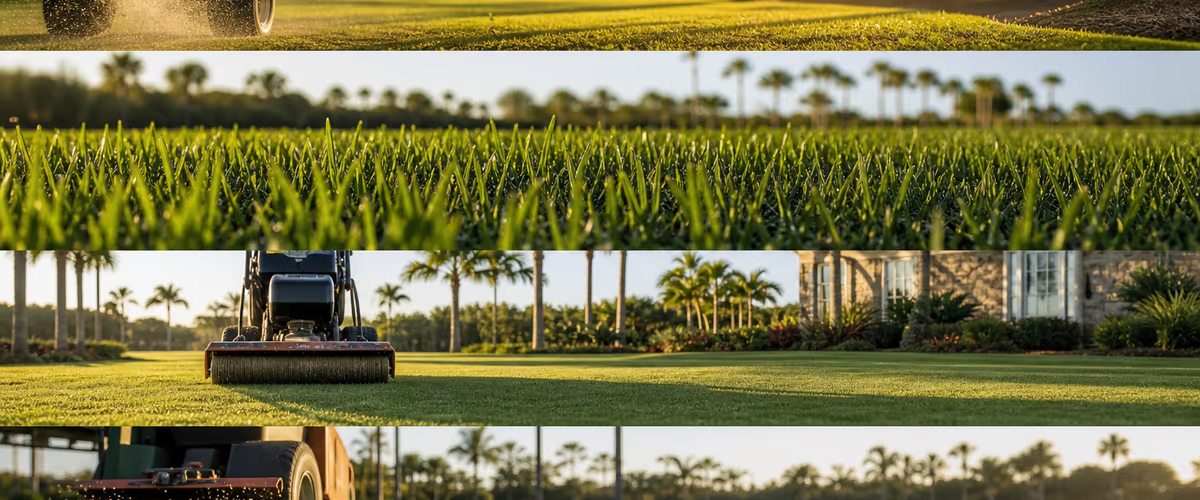
Hydroseeding is one of the few landscape investments where the calendar matters as much as the contractor. Apply at the wrong time of year and you’ll spend the next 30 days watching the slurry sit on bare soil without sprouting; apply during the right window and you’ll have a lawn before the next holiday weekend.
This guide covers when to hydroseed in Florida, region by region, including the species-specific windows for the most common warm-season grasses.
The simple version
For most Florida residential hydroseeding work, the prime application window is late March through early October — when soil temperatures are reliably above 65°F and germination happens fastest. Hydroseed Calculator’s Gainesville guide recommends “late spring to early summer or early fall” as the ideal periods, with a 50°F minimum soil temperature for warm-season grasses to germinate.
Within that window, the very best sub-windows are:
- April through early June — soil warm, spring rains help establishment, before peak summer heat stresses young seedlings.
- Mid-September through October — soil still warm, rainfall easing, cooler nights reduce evaporation.
Late June through August also works but requires more aggressive supplemental watering to compensate for evaporation. November through February is generally too cool for warm-season grasses, though it’s the right window for cool-season ryegrass overseeding on athletic fields.
Why soil temperature matters more than air temperature
Warm-season grasses (Bermuda, Bahia, Centipede, Zoysia, St. Augustine) germinate based on soil temperature, not the high temperature on a given day. The thresholds:
- Below 60°F soil: Most warm-season grass seed sits dormant. Germination rates collapse.
- 60–65°F soil: Slow, partial germination. Bahia is more cold-tolerant than Bermuda at this range.
- 65–80°F soil: Optimal range. Germination in 5–10 days for most blends.
- Above 85°F soil: Germination still happens but young seedlings stress and dry out faster. Aggressive watering required.
Florida soil temperature lags the air by about 2–4 weeks. The Panhandle hits the 65°F soil threshold around early-to-mid April; Central Florida hits it in late March; South Florida is at or above 65°F almost year-round.
Region-by-region calendar
North Florida (Pensacola, Tallahassee, Jacksonville, Gainesville)
The Panhandle and North Central regions have the most distinct seasonal pattern in Florida. Late freezes are possible into early March, and soil takes longer to warm.
| Month | Application advisability | Notes |
|---|---|---|
| January | Avoid | Soil too cold for warm-season germination. Use for ryegrass overseed only. |
| February | Avoid | Same. Late freezes still possible. |
| March | Late month only | Wait until soil reliably above 60°F. Final freeze date typically by mid-month. |
| April | Good | Soil warming, spring rain supplements irrigation. Strong window. |
| May | Excellent | Optimal soil temps, moderate rain. Peak residential application month. |
| June | Good | Warmer but rainy season begins. Tackifier-heavy slurries hold up better. |
| July | OK | Hot. Requires aggressive watering. Establishment slower than May. |
| August | OK | Same as July. Tropical activity may delay. |
| September | Good | Cooler nights, still-warm soil, rainfall easing. Strong second window. |
| October | Good | Excellent for late establishment before winter dormancy. |
| November | Late month avoid | Cool nights slow growth. First freezes possible by month end. |
| December | Avoid | Too cold. Use for overseed only. |
Central Florida (Orlando, Tampa, Ocala, Lakeland)
Central Florida’s window is wider than North Florida’s because the cold season is shorter and milder.
| Month | Application advisability |
|---|---|
| January–February | Avoid for new lawns. Acceptable for overseed projects. |
| March | Good. Soil warms earlier than North Florida. |
| April–June | Excellent — prime application window. |
| July–August | OK with aggressive irrigation. Frequent thunderstorms a wildcard. |
| September–October | Excellent — second prime window. |
| November | Acceptable in southern Central Florida; iffy further north. |
| December | Avoid. |
South Florida (Miami, Fort Lauderdale, West Palm Beach, Naples)
South Florida’s mild winters create an unusually wide application window — effectively year-round except for occasional cold snaps.
- Best months: April–October for the same reasons as the rest of the state.
- Acceptable: November–March with attention to brief cold snaps.
- South Florida’s hydroseed market is smaller because of widespread St. Augustine sod culture; contractors are harder to find.
Summer monsoon: ally, not enemy
Florida’s June-through-September rainy season looks like a problem for hydroseed (you don’t want rain washing the slurry off), but in practice the daily afternoon thunderstorm pattern usually helps:
- Tackifier sets within 1–2 hours of application. Most thunderstorms hit later in the afternoon, giving the slurry time to bond.
- Soil stays consistently moist during germination, reducing supplementary irrigation cost.
- Rainfall replaces hand watering during the critical first 2 weeks.
What to avoid: applying with a forecast of sustained heavy rain in the next 1–2 hours, or with a tropical storm or hurricane in the 7-day forecast. Schedule around the weather, not against it.
Cool-season overseed timing
For Bermuda athletic fields and high-visibility commercial properties that need to stay green through winter, annual ryegrass overseed is sprayed on top of dormant warm-season turf:
- Best window: mid-October to early November — Bermuda slowing down but soil still warm enough for ryegrass germination.
- Transition back: late March to early May — reduce mowing height to stress the ryegrass, allowing Bermuda to take back over.
Ryegrass dies back naturally as soil temperatures rise in late spring. See our athletic field service for the full overseed schedule.
When NOT to hydroseed in Florida
A few conditions where it’s better to wait:
- Hurricane in the 7-day forecast. Sustained heavy rain and wind can wash and disperse slurry.
- Soil temperature below 60°F. Germination will be unreliable; bare patches more likely.
- Sustained drought without irrigation. Hydroseed needs consistent moisture for 2–4 weeks. Without reliable irrigation or rain, you’ll fail.
- Site still under construction. Wait until grading, utilities, and rough landscape are done. Hydroseed last.
- Within 60 days of pre-emergent herbicide application. Pre-emergent will inhibit germination of your new seed too.
Species-specific timing notes
- Bermuda — most tolerant of summer heat; can germinate at higher soil temperatures than most. Strongest April–September window.
- Bahia — slightly more cold-tolerant; will germinate at lower soil temps than Bermuda. Earlier spring start possible.
- Centipede — moderate temperature preference; April through September. Slower to establish than Bermuda regardless of timing.
- Zoysia from seed — needs consistent warm soil (70°F+) and lots of patience. May–August is the realistic window.
- St. Augustine from seed — uncommon, since most St. Augustine is established from sod or plugs. If attempting from seed, June–August.
Plan your application around the calendar
If you’re flexible on timing, schedule for April–May or September–October. If you have a deadline (new construction, HOA, school season), match the deadline backwards by 6–8 weeks of establishment time to figure out when application should happen.
To get a Florida hydroseed quote with timing matched to your project, request a free estimate and we’ll work the calendar with you.