Hydroseed Timeline: What to Expect Week by Week
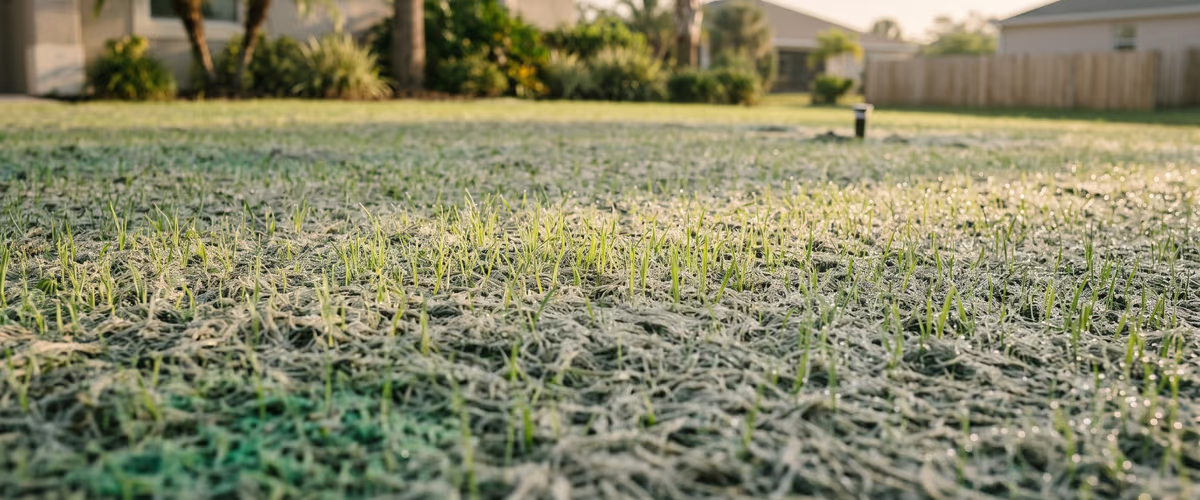
The hardest part of a hydroseeded lawn is the first two weeks, when it looks like nothing is happening. It is. Seed under the mulch is absorbing water, splitting open and sending roots down before anything shows above the surface. Knowing what each stage should look like keeps you from over-watering, re-seeding too early, or calling the contractor about a lawn that’s right on schedule.
The short answer: in warm Florida soil with consistent watering, Bermuda (the most common hydroseeded lawn grass here) usually shows first sprouts in 7–14 days, often faster in midsummer. It looks green from the street by weeks 3–4, is ready for a first mow around weeks 4–6, and fills in over weeks 6–8. Bahia and Centipede take roughly twice as long at every stage.
The timeline at a glance
| When | What you’ll see | What to do |
|---|---|---|
| Day 0–1 | Bright green slurry over bare soil | Stay off it; start watering as your contractor directs |
| Days 2–6 | Dye fading, mulch drying to a light crust, no visible grass | Keep the top inch moist with short cycles |
| Week 1 | First hair-thin sprouts in moist spots and low areas (Bermuda, warm soil) | Don’t rake, walk on or “check” the seed |
| Week 2 | Sprouts across most of the lawn; green fuzz up close, patchy from a distance | Begin tapering to fewer, longer cycles |
| Week 3 | 1–2 inch grass, green haze visible from the street | Inspect coverage from the edges; note bare spots |
| Week 4 | 2–3 inch grass, looks like a thin lawn | Get the mower ready; still no traffic |
| Weeks 5–8 | First mows; runners spreading into thin areas | High first cut, light fertilizer around weeks 6–8 |
| Month 3+ | Established lawn, still thickening | Normal care and normal use |
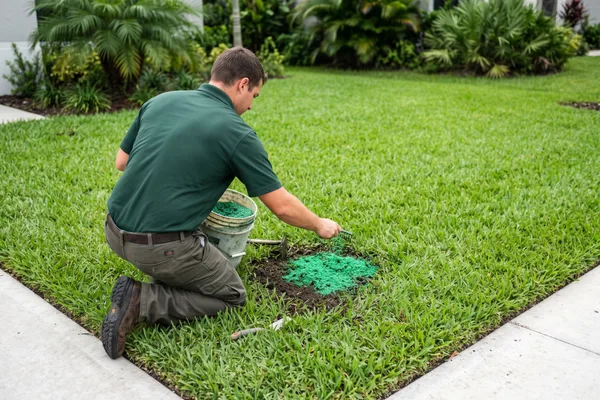
Day 0–1: bright green slurry
The vivid green color is dye in the mulch, not grass. It shows the crew where they’ve sprayed and helps you see coverage. The mulch layer protects the seed, holds moisture against the soil, and is bound in place by tackifier so rain and wind don’t move it. In full sun it dries to a light, paper-like crust within a day. That’s normal and doesn’t need breaking up.
Days 2–6: “nothing is happening”
Under the mulch, seeds are swelling and sending out a root before any shoot appears. This is the stage most vulnerable to drying out. A seed that has started germinating and then dries can die, so the job is simply consistent moisture: 2–4 short watering cycles a day, adjusted for heat and rain. The hydroseed watering schedule gives the exact minutes per zone.
Resist the urge to scratch at the mulch to look for seeds. Every disturbance breaks seed-to-soil contact.
After 1 week
In warm weather, Bermuda usually shows its first sprouts somewhere between days 5 and 10: hair-thin green threads, easiest to see if you crouch at the edge of the lawn and look across it at eye level. They appear first where moisture lingers, such as low spots, shaded edges and near sprinkler heads.
If you see nothing at day 7, don’t panic. That’s normal in cooler months, in North Florida in spring or fall, and for slower species like Bahia and Centipede.
After 2 weeks
A Bermuda lawn should show sprouts across most of the area, close up, with a fuzzy green look, but it still looks patchy from a distance. The dye has mostly faded to a gray-brown mulch color. Bahia and Centipede lawns are usually just starting to sprout.
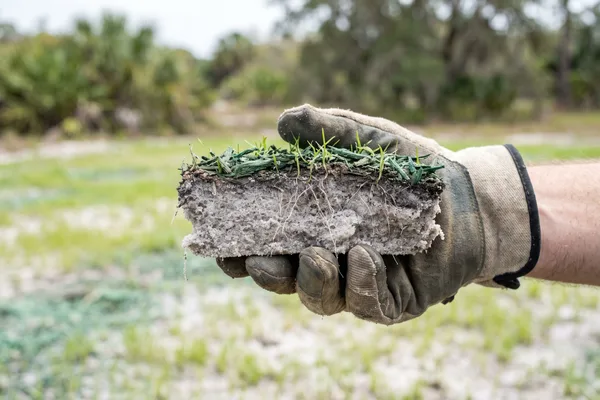
This is the point where watering starts to change: fewer, longer cycles that push roots deeper instead of only keeping the surface wet.
After 3 weeks
Bermuda is typically 1–2 inches tall, and the lawn reads as green from the street. Thin areas are now easy to spot. Walk the perimeter (not the lawn) and note any bare patches larger than about a square foot. Small gaps usually fill in as the grass spreads. Larger ones may need a touch-up, and most contractors want to hear about them within a 30-day window.
After 4 weeks
The lawn looks like a young, thin lawn from a distance, with Bermuda at 2–3 inches or more in the strongest areas. You’re close to the first mow, which happens when most of the grass reaches 3–4 inches. Our guide on when to mow and walk on hydroseed covers the first cut and foot-traffic timing.
Weeks 5–8: first mows and fill-in
Mowing actually helps now. Cutting the tips encourages Bermuda to spread sideways through runners, which thickens thin areas. A light, half-rate fertilizer application usually comes around weeks 6–8, as covered in our first 90 days aftercare guide.
Month 3 and beyond
By about 90 days, a well-watered warm-season lawn is established enough for normal use, mowing and spot weed control. It keeps thickening through its first full growing season. By month 8 or so, most well-cared-for hydroseeded lawns are hard to tell apart from sod.
How long does hydroseed take to grow? Four things decide it
- Grass species. Annual ryegrass (winter overseed) sprouts in 5–10 days. Bermuda takes 7–14 days. Zoysia takes 10–21 days. Bahia and Centipede take 14–28 days and fill in slowly. See choosing grass seed for Florida for the full comparison.
- Soil temperature. Warm-season grasses germinate best once soil stays above roughly 65°F. In Florida that means late spring through summer is fastest, and North Florida’s cooler months are slowest. Our guide to the best time to hydroseed in Florida breaks this down by region.
- Watering consistency. The single most common cause of a “slow” hydroseed lawn is a dry surface during the first two weeks.
- Prep and slope. Compacted soil, debris and poor seed-to-soil contact slow everything down. Slopes that shed water need the right slurry; see our BFM and slope guide.
Is your hydroseed behind? A quick diagnostic
- Nothing by day 14 in warm weather (Bermuda). Check moisture: lift a pinch of mulch an hour after a cycle. If the soil underneath is dry, add a cycle or lengthen each one slightly.
- Sprouts only in low spots and along edges. That pattern usually means sprinkler coverage gaps. Watch a full cycle and adjust heads or add a hose-end sprinkler for dry zones.
- Sprouts appeared, then thinned or browned. Often a missed watering on a hot day. Evening watering that leaves the lawn wet overnight can also cause fungus. Water in the morning and late afternoon instead.
- Large bare patches at 30 days. Contact the contractor about a touch-up while you’re inside the warranty window. Our hydroseeding cost guide lists the warranty questions to ask before you sign.
- Lots of weeds early. Many weeds sprout faster than lawn grasses. Hand-pull the big ones and hold off on herbicides until at least 90 days.
Can you speed it up?
Not much, and most shortcuts backfire. Extra fertilizer burns seedlings, extra water washes slurry and invites fungus, and early foot traffic crushes new sprouts. What reliably helps is planning: seed in the warm season, choose a faster-establishing species like Bermuda if time matters, and keep the watering routine steady.
If you’re planning a project and want a realistic timeline for your property, request a free estimate and our team will walk you through species and scheduling options for your area.