When Can You Mow or Walk on Hydroseed?
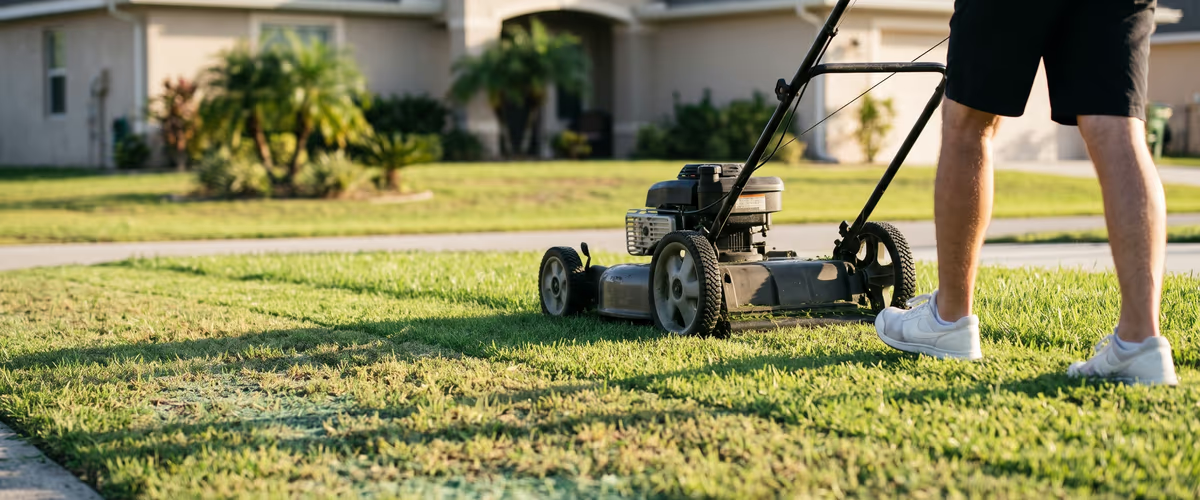
A new hydroseeded lawn looks sturdy long before it is. The grass blades are up, but the roots under them are short and shallow, and the plants’ growing points are easy to crush. Mowing too early or letting the family onto the lawn too soon is one of the most common ways an otherwise good application ends up thin and patchy.
Quick answers
When can you mow hydroseed for the first time? When most of the lawn is 3–4 inches tall, and not before about week 4. For Bermuda in warm weather that’s usually weeks 4–6. Bahia, Zoysia and Centipede often take 6–12 weeks.
How high should the first cut be? Set the mower to its highest setting, at least 3 inches, and never remove more than a third of the blade height in one mow.
When can you walk on hydroseed? Keep off it completely for the first 3 weeks, except for essential irrigation fixes. Light walking is fine after the first couple of mows, around weeks 6–8. Normal use, including kids playing, comes at about 3 months.
When can dogs go on a hydroseeded lawn? Ideally not until about 8 weeks, after several mows. Running, digging and concentrated urine all damage young grass.
Can you walk on hydroseed to water it? Avoid it. Water from the edges with sprinklers or a timer. If you must step on it, lay down a board to spread your weight and use the same path each time.
Why timing matters
For the first few weeks, a hydroseeded lawn is held together by the mulch layer and very short roots. Two things go wrong when it’s disturbed too early:
- Mower wheels and blades pull seedlings out. Shallow-rooted grass doesn’t resist the tug of a blade, especially a dull one, and the wheels of heavy mowers press ruts into soft soil.
- Footsteps crush the growing point. On young grass the growing point (the crown) sits right at the soil surface. Crushing it kills the plant, which is why footprint paths often stay bare.
Waiting a few extra days costs nothing. Mowing a week too early can cost a touch-up application.
The first mow, step by step
- Measure, don’t guess. Check height with a ruler in several spots. Most of the lawn should be at 3–4 inches, not just the fastest patches.
- Mow when the surface is dry. Wet seedlings tear and clump, and wet soil ruts. Mow a few hours after a morning watering cycle has dried, or skip one cycle that day.
- Sharpen the blade first. A dull blade rips young grass out by the roots instead of cutting it.
- Use the lightest mower you have. A push mower is better than a heavy riding mower for the first few cuts. Make turns on the driveway or sidewalk, not on the lawn.
- Cut high and take off no more than a third. Set the deck at 3–3.5 inches for the first mow.
- Bag the clippings the first time. A heavy layer of clippings can smother thin areas and hold moisture that encourages disease.
After that, mow every 7–10 days and lower the height gradually, about a quarter inch each time, until you reach the normal height for your grass.
Mowing timeline by grass type
| Grass | Typical first mow (warm season) | Normal mowing height once established |
|---|---|---|
| Bermuda | Weeks 4–6 | About 1.5–2 inches with a rotary mower |
| Zoysia (seeded) | Weeks 6–8 | About 1.5–2.5 inches |
| Bahia | Weeks 6–10 | 3–4 inches |
| Centipede | Weeks 8–12 | About 1.5–2 inches |
| Annual ryegrass (winter overseed) | Weeks 3–4 | Mow with the Bermuda it overseeds |
These ranges assume warm soil and steady watering. Cooler months, especially in North Florida, push every number later. The hydroseed timeline shows what the lawn should look like at each stage.
When can you walk on hydroseed?
| Time since application | Foot traffic |
|---|---|
| Weeks 0–3 | None. Fix irrigation from the edges or on a board. |
| Weeks 3–6 | Only what’s needed, such as mowing and sprinkler adjustments. |
| Weeks 6–8 | Light use: crossing to the mailbox, a quick walk-through. |
| About 3 months | Normal use, including kids playing and gatherings. |
For slower grasses like Bahia, Centipede and Zoysia, add two to four weeks to each stage. Avoid concentrated wear, like the same shortcut path every day or a soccer goal in one spot, until the end of the first growing season.
Kids and pets
Dogs are harder on a new lawn than people. They run the same routes, dig in soft soil, and urine concentrates nitrogen in one spot, which can scorch young grass. If you can, keep dogs off the new lawn for about eight weeks, using a temporary fence or a designated potty area of mulch or gravel. Kids’ play can usually start around the three-month mark, once the lawn has been mowed regularly for several weeks.

What if someone already walked on it?
A few footprints in the first week usually recover on their own. Don’t rake or smooth the mulch; just keep watering normally. A worn path, tire ruts or a dog’s running track that stays bare after the surrounding grass fills in will likely need a spot reseed or a contractor touch-up. Report it within the warranty window if your contract has one.
Fertilizer and weed control timing
Mowing and feeding go together. The first light fertilizer application usually comes around weeks 6–8, at half the label rate, and herbicides should wait until at least 90 days. Several Florida counties and cities also restrict nitrogen and phosphorus fertilizer during the summer rainy season, so check local rules before you feed. The full schedule is in our first 90 days aftercare guide, and the watering schedule covers how to adjust irrigation once you start mowing.
Planning a new lawn? Request a free estimate and our team can recommend a grass and schedule that fit how you’ll use the yard.