Hydroseed Watering Schedule: The 30-Day Guide That Saves Your Lawn
By Editorial Team · February 3, 2026
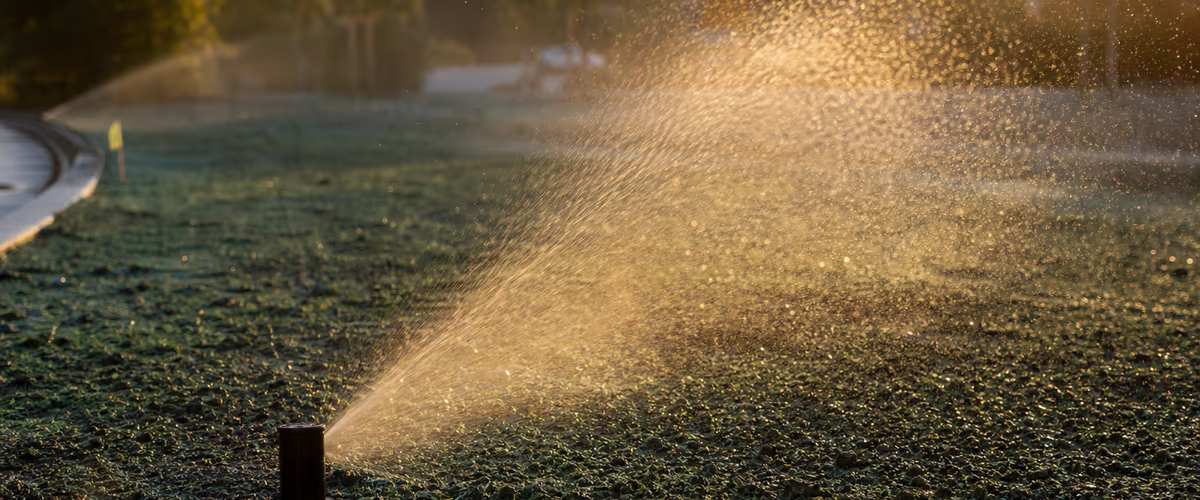
Of all the variables that determine whether a hydroseeded lawn succeeds or fails, the watering schedule is the most important — and the most commonly mishandled. Too little water and the seed dries out before germination. Too much and the slurry washes off the soil. Get the first 30 days right and the rest of the lawn’s life is straightforward.
This guide walks through the day-by-day schedule, what each phase looks like, and the common mistakes that cost homeowners their lawns.
The four phases
The watering schedule has four distinct phases, each with different goals:
| Phase | Days | Goal | Frequency |
|---|---|---|---|
| Germination | 1–14 | Keep top inch consistently moist | 2–4 short cycles per day |
| Early establishment | 15–28 | Encourage root depth | 1–2 cycles per day, longer |
| Establishment | 29–60 | Train deep roots | 3× per week, deep |
| Maintenance | 60+ | Normal lawn care | Per local restrictions |
Each phase transition is gradual, not abrupt. Watch the lawn rather than the calendar.
Phase 1: Germination (Days 1–14)
This is the most critical phase and the one most homeowners get wrong.
The goal: Keep the top inch of soil consistently moist. Not saturated, not dry. The Bob Vila guide to hydroseeding recommends watering “three to four times a day for at least 15 minutes” during the first 2 weeks — that’s roughly the right ballpark for Florida conditions.
Recommended schedule:
- Early morning (6:00–8:00 AM): 5–10 minutes per zone
- Mid-morning (10:00–11:00 AM): 5–10 minutes per zone
- Mid-afternoon (1:00–3:00 PM): 5–10 minutes per zone (skip if rain forecast)
- Late afternoon (4:00–5:00 PM): 5–10 minutes per zone (skip in cooler months)
The exact number of cycles depends on weather:
- Hot, sunny, dry conditions: 4 cycles per day, on the shorter end (5–7 minutes each)
- Mild, cloudy, humid conditions: 2 cycles per day, slightly longer (10–15 minutes each)
- Rainy day: 0 cycles if the rain was substantial; 1 short cycle if just a sprinkle
What you should see by day 7–10: First green sprouts visible against the fading green tackifier dye. The lawn looks fuzzy at close range. If you don’t see anything by day 10, check that you’re watering enough — by far the most common cause of delayed germination.
Phase 2: Early establishment (Days 15–28)
Once germination is visible, the roots start reaching deeper. Watering shifts from “keep the surface wet” to “encourage downward growth.”
The goal: Soak the top 2–3 inches consistently, but let the surface dry between cycles. This signals the roots to keep reaching down for water.
Recommended schedule:
- Morning (7:00–9:00 AM): 15–20 minutes per zone
- Afternoon (3:00–5:00 PM): Skip on cooler days; 10–15 minutes on hotter days
- Reduce to once daily by the end of week 4
What you should see by day 21: Visible grass blades, 1–2 inches tall in the most-established areas, lighter density in slow patches. Tackifier dye almost completely faded.
Phase 3: Establishment (Days 29–60)
By the start of week 5, the lawn should look mostly filled in (though still patchy on close inspection). This is when the watering pattern shifts to the long-term schedule that builds drought tolerance.
The goal: Deep, infrequent watering. Force the roots to grow downward by letting the upper soil dry between cycles.
Recommended schedule:
- Three days per week (Monday/Wednesday/Friday or similar)
- Early morning to minimize evaporation
- 30–45 minutes per zone — enough to soak 4–6 inches deep
- Skip cycles when rainfall already provided the equivalent
The Bob Vila guide recommends “1 to 1.5 inches of water per week” after the first month, and that’s a reasonable target — most Florida lawns need about 1 inch per week including rainfall.
Phase 4: Maintenance (Day 60 and beyond)
By day 60, the lawn is fully established and can transition to normal local watering practices.
- Comply with local water restrictions. Most Florida water management districts have specific allowable watering days/hours.
- Match watering depth to root depth. Deep roots need deep, infrequent watering. Shallow watering encourages shallow roots and a less drought-tolerant lawn.
- Adjust seasonally. Summer rains often reduce supplementary watering needs; winter cool spells may eliminate it entirely.
How to tell if you’re watering correctly
Underwatering signs:
- Tackifier dye stays visible past day 14
- Sparse or no germination by day 10
- Bare patches that don’t fill in
- Footprints stay visible in the lawn after walking on it
Overwatering signs:
- Standing water or puddles after watering
- Slurry running downhill toward storm drains
- Algae or fungus growth (slimy green or white patches)
- Yellowing seedlings in low spots
- Mosquito problems
Just right:
- Surface darkly moist immediately after a cycle, slightly damp 30 minutes later
- No runoff
- Uniform germination across the whole lawn
- Footprints disappear within a few minutes
Common watering mistakes
- Watering once a day for 30 minutes in the first week. Long cycles wash the slurry; short cycles are key during germination. Frequency over duration in phase 1.
- Skipping the afternoon cycle on a hot, dry day. Florida summer afternoons can dry the surface in under 2 hours. Skipping doubles the dry time.
- Watering at night. Standing water overnight invites fungus and algae. Always water in morning or late afternoon, never after sunset.
- Not adjusting for rain. A heavy thunderstorm provides days of moisture. Continuing the regular schedule on top causes saturation problems.
- Forgetting the corners and edges. Sprinkler patterns often leave dry zones. Walk the lawn after a cycle and check for missed spots; supplement with hose-end sprinklers if needed.
What to do if you missed a watering
Missing one cycle in phase 1 is recoverable. Missing a whole day during germination can cost you 20–30% of seedlings. Recovery steps:
- Don’t try to make up for it with a single long soak — you’ll wash the slurry.
- Resume the normal schedule immediately, ideally with one extra short cycle that day.
- Watch for bare patches over the next week. If they appear, ask the contractor about a touch-up under warranty.
When you can stop worrying
By day 30–45 for most Florida lawns, the establishment is far enough along that the worst risks are behind you. The lawn won’t die from a missed watering at that point. You’re transitioning from intensive care to normal maintenance.
For more on the full aftercare picture beyond watering, see our first 90 days aftercare guide.