Hydroseed Aftercare: The First 90 Days That Determine Success
By Editorial Team · March 5, 2026
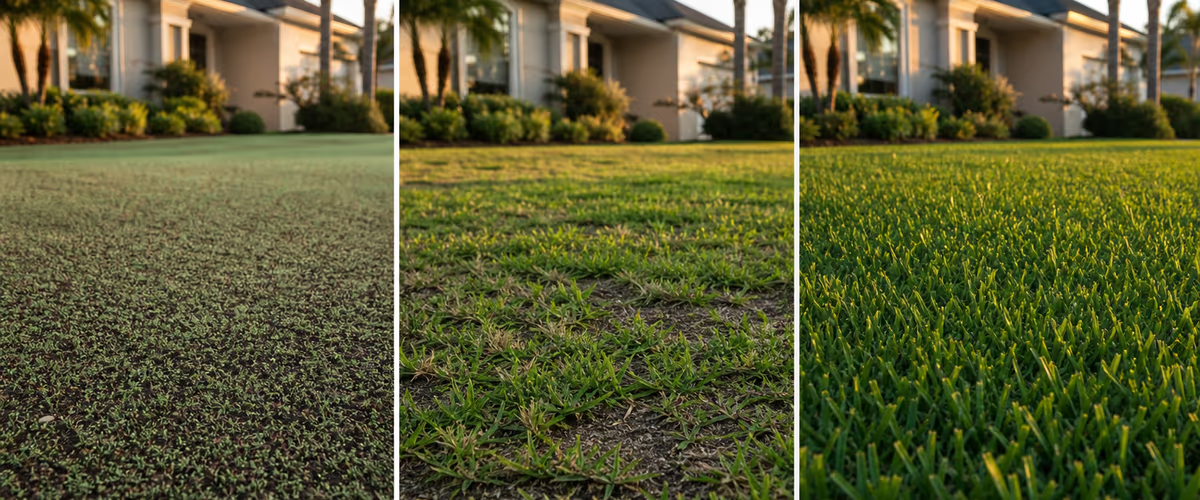
The contractor finishes the spray. The slurry is bright green on bare soil. Now what? The first 90 days after hydroseeding decide whether you end up with a uniform, deep-rooted lawn or a patchy disappointment with bare spots that never quite fill in. This guide is the week-by-week schedule for the establishment period.
The 12-week roadmap
| Phase | Weeks | Main task | Watch for |
|---|---|---|---|
| Germination | 1–2 | Intensive watering | First sprouts by day 7–10 |
| Establishment | 3–4 | Watering taper, no traffic | Visible green coverage |
| First mow | 5–6 | High mow, sharp blades | Don’t rush below 3” |
| Fill-in | 7–9 | Light fertilizer, controlled traffic | Bare spots filling in |
| Normal care | 10–12 | Transition to maintenance | Routine lawn care |
Weeks 1–2: Germination
The most important phase. See our watering schedule article for the full daily routine, but the high-level rules:
- Water 2–4 times per day in short cycles (5–15 minutes each). Goal: top inch of soil consistently moist.
- No foot traffic — none. Not even quick walks to check coverage. Use binoculars or a long camera if you need a close look.
- No mowing — obvious but worth saying.
- No herbicides, no weed-and-feed, no insecticides — chemicals during germination can kill seedlings.
- No fertilizer beyond what’s in the slurry — starter fertilizer is already there.
The Bob Vila hydroseeding guide notes that the first 2 weeks need watering “three to four times a day for at least 15 minutes” — that’s the cadence to aim for. Hot, dry, windy conditions push toward the high end; cool, cloudy, humid days toward the low end.
What you should see: Tackifier dye starting to fade. First green sprouts visible at days 7–10 against the brown/green background. If you don’t see anything by day 10, increase watering frequency.
Weeks 3–4: Establishment
Germination is visible across most of the lawn. Now the roots need to go deeper.
- Water tapers to once or twice daily, longer per cycle (15–20 minutes per zone). The goal shifts from “keep surface wet” to “soak the top 2–3 inches.”
- Still no foot traffic. Bob Vila’s guide recommends “rope off access to the area for about 4 to 6 weeks” — that’s a real timeline, not a suggestion.
- Still no chemicals. Herbicides will damage young seedlings; insecticides aren’t needed yet.
- First inspection — walk the perimeter (don’t step on the lawn) and identify any bare patches >1 sq ft. Note them for the 30-day touch-up conversation with your contractor.
What you should see: Most of the lawn covered with 1–2 inch tall grass. Some thinner patches normal. Tackifier dye largely faded.
Weeks 5–6: First mow
This is when your young lawn officially becomes a real lawn — but mowing technique matters.
When to mow first: When the grass reaches 3–4 inches tall, but no earlier than week 4. Most Florida lawns hit this around week 5.
How to mow first:
- Set the mower as high as it goes — minimum 3.5 inches. Cutting too short shocks young grass.
- Use a sharp blade — a dull blade pulls seedlings out of the soil rather than cutting them.
- Mow when the lawn is dry — wet grass clumps and tears easier.
- Bag the clippings for the first mow — leaving them adds disease risk to young grass.
- Don’t cut more than one-third of the blade height per mow.
After the first mow:
- Mow every 7–10 days, gradually lowering the cutting height by 1/4” each time until you reach your target height (typically 2.5–3” for Bermuda, 3–4” for Bahia or Centipede).
- Continue avoiding heavy foot traffic — Bob Vila notes light use only for “3 or 4 months.”
Weeks 7–9: Fertilization and fill-in
The lawn looks mostly established. Bare patches are slowly filling in from adjacent grass spreading.
First fertilizer application (week 6–8 depending on growth rate):
- Use a balanced fertilizer like 10-10-10 or a slow-release lawn formula.
- Apply at half the labeled rate for the first application — full rate can burn young grass.
- Water in lightly after application.
- Wait at least 2 weeks before the next fertilization.
Weed handling:
- Hand-pull large weeds — don’t apply herbicides yet (60–90 day rule).
- A dense, healthy lawn outcompetes most weeds. The best long-term defense is dense turf, not chemicals.
- If weeds are severe (>20% of the lawn area), consult the contractor — there may be an underlying seed-bank issue from poor pre-application prep.
Traffic:
- Light use OK — walking across to get to the mailbox, occasional play.
- Still avoid concentrated traffic (sports practice, party crowds, pets running back and forth on the same path).
Weeks 10–12: Normal lawn care
By week 10, the lawn should look mostly finished. Transition into the regular maintenance routine.
Watering:
- Three times per week is the typical target for Florida lawns, deep (30–45 minutes per zone) rather than frequent.
- Early morning to minimize evaporation and disease.
- Comply with local water restrictions (most Florida WMDs have set allowable watering days).
Mowing:
- Continue weekly mowing at your target height.
- Sharpen the blade every 8–10 mowing sessions.
- Mulch the clippings back into the lawn (free nitrogen).
Fertilization:
- Light second application around week 12.
- Switch to your normal Florida lawn fertilizer schedule afterward — typically 3–4 applications per year for Bermuda, less for Bahia or Centipede.
Herbicides:
- Wait until at least 90 days after seeding before any herbicide application. Bob Vila notes the same 90-day rule.
- When you do start, use spot-treatment rather than blanket applications when possible.
- Avoid weed-and-feed products until at least 6 months in — most pre-emergents in those products will damage continued grass spread.
Common 90-day mistakes
- Cutting too short on the first mow. Anything below 3” stresses young grass severely.
- Applying weed-and-feed at week 8. Too early — wait until at least week 12.
- Heavy fertilization “to make it grow faster”. Burns young grass. Half-rate is the rule.
- Skipping watering when you see germination. Germination is just the start — roots need consistent moisture for several more weeks.
- Letting pets onto the lawn at week 3. Bob Vila’s “rope off for 4–6 weeks” rule applies to pets too.
- Ignoring bare patches. Small patches (under 1 sq ft) usually fill in. Larger patches need contractor touch-up — request it within the 30-day warranty window most contractors offer.
When you can stop worrying
By day 90, the lawn is established enough that normal life can resume:
- Heavy traffic OK (kids, pets, parties)
- Normal mowing schedule and height
- Herbicides acceptable (spot-treat first, blanket second)
- First-year fertilization plan in place
- Bare patches that haven’t filled in by now probably won’t naturally — plan for a small repair seed pass or sod patch
The next milestone is the one-year mark, when you’ll see the full picture of how the lawn establishes through Florida’s first full growing cycle. Most well-aftercared hydroseeded lawns look indistinguishable from sod-installed lawns by month 8.
Watering, mowing, and feeding from year two onward
See our resources on:
For questions specific to your lawn, request a contractor consultation and we’ll match you with a local pro.