Hydromulching & Advanced Ground Prep
Meticulous dirt prep — debris removal, fine grading, leveling, raking — combined with hydromulch application for optimal seed-to-soil contact.
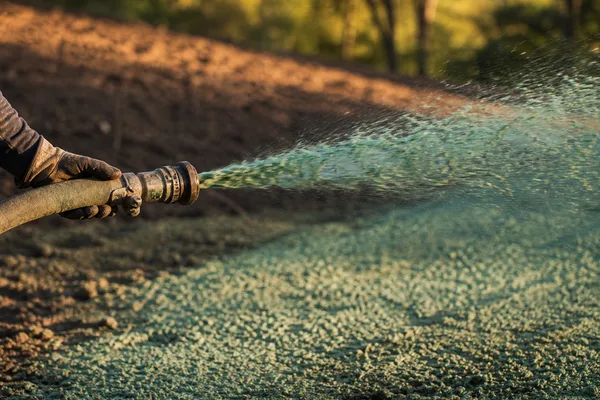
Full prep included — no leftover debris or rough ridges
Wood, paper, or blended fiber mulch matrix
Tackifier-bound to resist wind and rain washout
Color-tinted for inspection visibility
Hydromulching is the close cousin of hydroseeding — same equipment, same delivery method, but the slurry is engineered for soil protection rather than (or in addition to) grass establishment. When a project needs more reliable surface coverage than standard hydroseed provides, hydromulch is the upgrade. This service combines that application with the ground prep needed to make it stick.
Hydroseed vs hydromulch — what’s the difference?
The two terms get used interchangeably, but contractors mean slightly different things:
- Hydroseed = seed + mulch + tackifier + fertilizer in a thin slurry. The mulch is there mainly to keep the seed moist and bound to the soil for a few weeks until germination. Mulch rates are relatively low (typically 1,500–2,500 lb/acre).
- Hydromulch = a denser, fiber-heavier slurry where the mulch matrix is the primary product. Higher application rates (3,000–4,500 lb/acre standard, up to 4,500+ for BFM and SMM products) build a continuous protective layer. Seed is often still present, but the matrix is engineered to perform whether or not the seed germinates immediately.
In practice, “hydromulching” on a residential or small commercial lawn often refers to a heavier-than-standard mulch rate to compensate for difficult soil or slope conditions, while “hydromulching” on a DOT slope refers to engineered products like Bonded Fiber Matrix (BFM) or Stabilized Mulch Matrix (SMM). See our erosion control service for the slope-specific applications.
Mulch fiber options and when to use each
The fiber component of the slurry comes in several types:
- Pure wood fiber mulch. The default for most professional jobs. Better water retention and erosion control than paper. Used at standard rates for lawns, higher rates for slopes.
- Pure paper fiber mulch. Cheaper, lighter, easier to mix. Less durable in wind and rain. Suitable for flat, low-stakes applications where cost matters more than performance.
- 70/30 wood/paper blend. A common middle-ground that gives most of the wood-fiber benefits at slightly lower cost.
- Bonded Fiber Matrix (BFM). Engineered wood fiber with crosslinking polymer additive. Cures into a continuous rain-resistant mat. Specified for steep DOT slopes and high-risk erosion sites.
- Stabilized Mulch Matrix (SMM). A step down from BFM — wood fiber with a less aggressive bonding agent. Suitable for moderate slopes and properties with rain exposure but not steep enough to require BFM.
- Straw hydromulch. Less common in Florida but used on some agricultural and reclamation projects. Cheaper bulk material, requires less water during application.
Reputable contractors will tell you which fiber they’re spec’ing in the quote. If the quote just says “mulch” without specifying, ask.
Why ground prep matters
The single biggest determinant of hydromulch success is what’s underneath it. Poor prep means poor results, no matter how good the slurry is:
- Loose debris and rocks interrupt seed-to-soil contact and create voids where the mulch can’t bind. Any debris larger than a golf ball needs to be removed.
- Compacted soil prevents root penetration. Hard-packed lots from construction traffic typically need mechanical decompaction — light tilling, harrowing, or scarification.
- Surface crust on undisturbed soil sheds water and prevents seed germination. A light raking with a stiff garden rake or harrow breaks the crust and gives the slurry something to grip.
- Low spots that pool water will become bare patches when seedlings drown. Fill or grade these before application.
- High spots that dry out faster than the surrounding area will also fail. Either grade them down or plan supplementary watering for those zones.
Standard prep included in a hydromulching service typically covers light surface raking and obvious debris removal. Heavy clearing, fine grading, fill placement, and decompaction usually quote separately.
What the day-of application looks like
A typical residential hydromulching job:
- Crew arrives with a trailer-mounted hydroseeder, water source (either site-supplied or a tank truck), and prep equipment (rakes, blowers, sometimes a small tractor).
- Final walkthrough with the homeowner — confirming the boundaries, any “do not spray” zones (existing landscaping, sidewalks), and access for the hose.
- Surface prep pass — debris removal, light raking, any last-minute leveling.
- Slurry mixing in the tank — typically 15–30 minutes depending on tank size.
- Application pass — operator walks the property, spraying with a handheld nozzle for precision or a tower nozzle for open areas. The slurry arrives green from the tackifier dye.
- Cleanup and walkthrough — operator confirms coverage, leaves watering instructions, schedules the 7–10 day follow-up.
A 5,000 sq ft yard typically takes 2–4 hours from arrival to departure. Larger commercial work runs full days.
The green tint and what to expect
The slurry’s vivid green color comes from the tackifier dye — it’s there so the contractor can see uniform coverage during application. The dye fades over the first 30–60 days as the mulch fiber breaks down. Don’t worry that your yard looks like a putting green for the first few weeks; the color is supposed to disappear as the actual grass takes over.
Get a quote with prep included
For a hydromulching quote that includes the prep your site actually needs, request a free estimate — we’ll match you with a vetted Florida pro who’ll walk the site and price the full job, not just the spray pass.