Residential Lawn Seeding
Hydroseeding for new-construction homes and total yard restoration — a lush, deep-rooted lawn in a fraction of the time of seeding by hand.
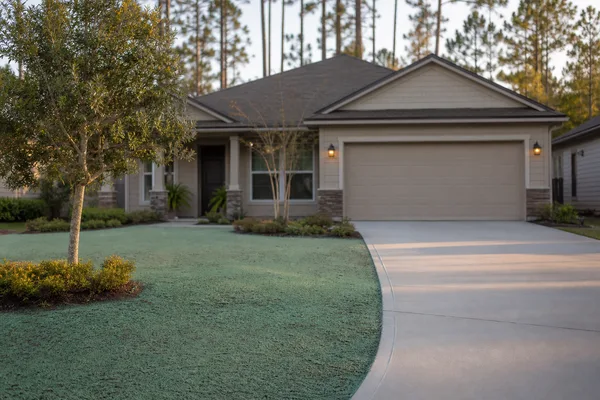
Germinates in 5–10 days, fully established in 4–6 weeks
Custom seed blends matched to North & Central Florida soil
Typically 3–5× lower per-square-foot cost than installed sod
Deeper, more drought-tolerant root system than sod rolls
Residential hydroseeding is the fastest, most cost-effective way to turn a bare lot into a finished lawn — and in Florida’s warm climate, it usually outperforms both dry seed and sod within a year. This service covers new-construction lots, full yard renovations, and section repairs over 2,000 sq ft.
What residential hydroseeding includes
A standard residential application covers four steps:
- Site assessment. A contractor walks the property, checks soil condition and pH (most warm-season grasses thrive at pH 6.5–7.0), measures square footage, and recommends a seed blend matched to your sun exposure, irrigation setup, and intended use.
- Light surface prep. Loose debris is cleared, the top inch of soil is lightly raked to give the slurry a grip surface, and any obvious low spots are noted. Heavy grading and large debris removal usually quote separately.
- Slurry application. Seed, wood or paper fiber mulch, a tackifier to resist washout, and a starter fertilizer are mixed in a tank-mounted hydroseeder and sprayed across your prepped soil. The mix arrives green from the tackifier dye, which fades over the first 30–60 days as the mulch breaks down.
- A first-week check. Most reputable contractors follow up within 7–10 days to verify germination is on track and answer any watering questions.
Common Florida seed blends
Selection matters more than most homeowners realize. The right blend depends on sun, traffic, and how much water you’re willing to put down:
- Bermuda — drought-tolerant, durable, popular for sunny lawns. Fastest-growing common warm-season grass.
- Bahia — low-maintenance, deep roots, handles sandy soils well. Common in larger rural and roadside applications.
- Centipede — slow-growing, low-input, suited to homeowners who want minimal mowing and fertilizing.
- Zoysia — premium look, dense, choking out weeds once established. Slower to fill in from seed than from sod, but possible with patience.
- Custom blends — many contractors mix two or three species to balance shade tolerance, drought resistance, and traffic durability.
The lowest-cost blends are usually Bahia and basic Bermuda; Zoysia and certain St. Augustine cultivars sit at the higher end.
Why homeowners pick hydroseed over sod
Three reasons account for most of the demand:
- Cost. Hydroseeding in Florida typically runs $0.15–$0.30 per square foot versus $0.50–$1.50 per square foot installed for sod — roughly 3–5× cheaper depending on which end of each range applies. See the full cost comparison for what each price actually includes.
- Root depth. Because the grass germinates in place, root systems generally penetrate deeper than transplanted sod, which translates to better drought tolerance after the first summer.
- Uniform coverage. The slurry is sprayed mechanically, so coverage is even and there are no visible seams between sod rolls.
The trade-off is time: hydroseed needs 4–6 weeks of careful watering before the lawn is fully usable. Sod looks finished the day it’s installed.
What you do before the team arrives
Three things on your end can save money on the quote:
- Clear the site. Pick up construction debris, branches, large rocks, and anything else the contractor would otherwise have to remove. This is the single biggest variable that pushes a quote higher.
- Verify your irrigation. The first 7–10 days require multiple short watering cycles per day. If your irrigation system has dry zones or hasn’t been tested recently, fix that before application — running around with hose-end sprinklers for two weeks gets old quickly.
- Plan around heavy weather. If a tropical storm is in the 7-day forecast, reschedule. Tackifier resists normal rain after the first hour, but a sustained downpour during application can wash slurry off slopes.
Aftercare in the first 30 days
The watering schedule is the single biggest determinant of success.
- Days 1–14: Water 2–4 short cycles per day (5–15 minutes per zone). Goal is consistently moist topsoil, not standing water. Avoid puddles or runoff — they wash seed downhill.
- Days 15–28: Transition to longer, less frequent cycles as roots reach deeper. One to two cycles per day, 15–20 minutes each.
- Day 30 onward: Deep, infrequent watering — typically 30–45 minutes per zone, three times per week.
First mow usually happens at week 4–6 once the grass reaches 3–4 inches. Set the mower high (3.5”+) for the first few cuts and use a sharp blade — a dull blade pulls seedlings out of the soil.
Avoid herbicides, weed-and-feed products, and heavy foot traffic for 60–90 days. A dense, healthy lawn is the best long-term weed defense.
Ready for a quote?
Request a free hydroseeding estimate — we’ll match you with a vetted Florida pro who will measure your site and respond within one business day.